Frequently asked questions
Mastering the Memory Palace method
Quick answers about memory techniques: how to remember a list, new words, what you read, or a speech with a Memory Palace.
What are the Memory Palace, Method of Loci, and Cicero's Method?
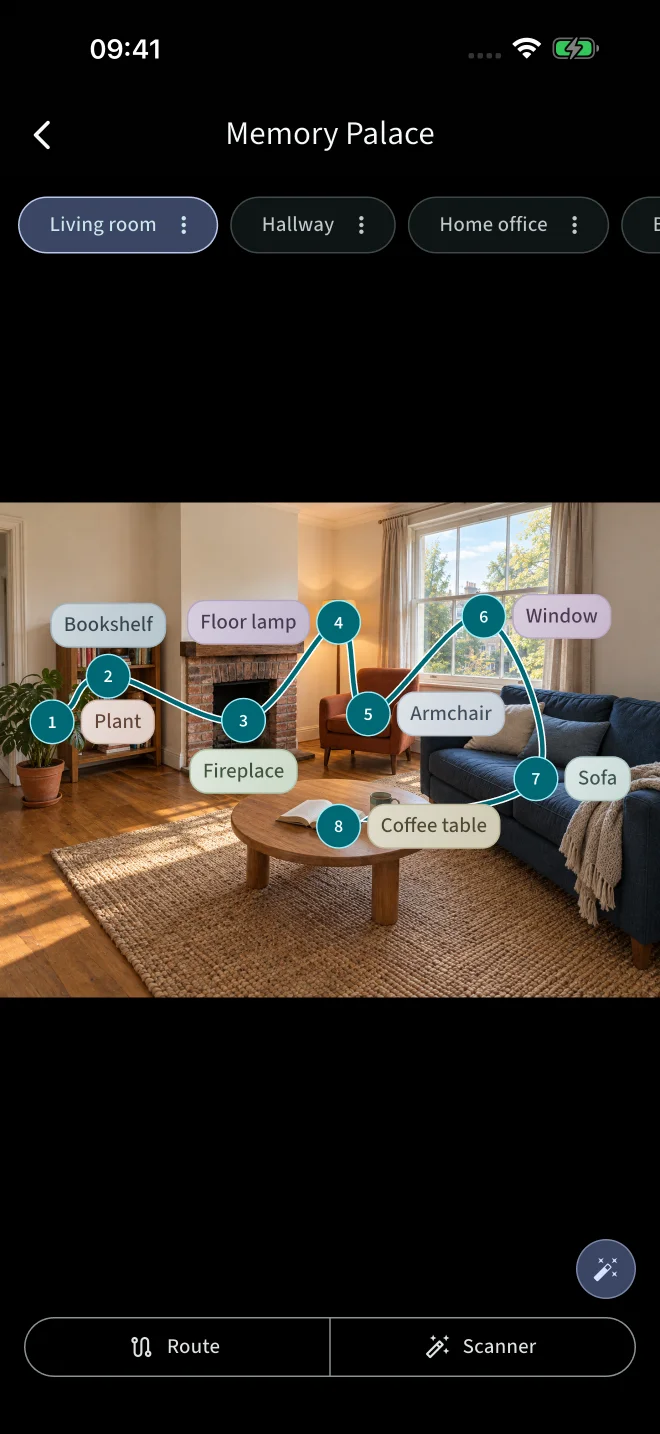
They are all names for the same spatial mnemonic system (also called the Roman Room technique or Mind Palace). The Latin word locus means "place." You select a familiar physical space, mark a sequence of landmarks inside it, and mentally place information at each landmark using vivid visual scenes.
What memory techniques are there, and where does the Memory Palace fit?
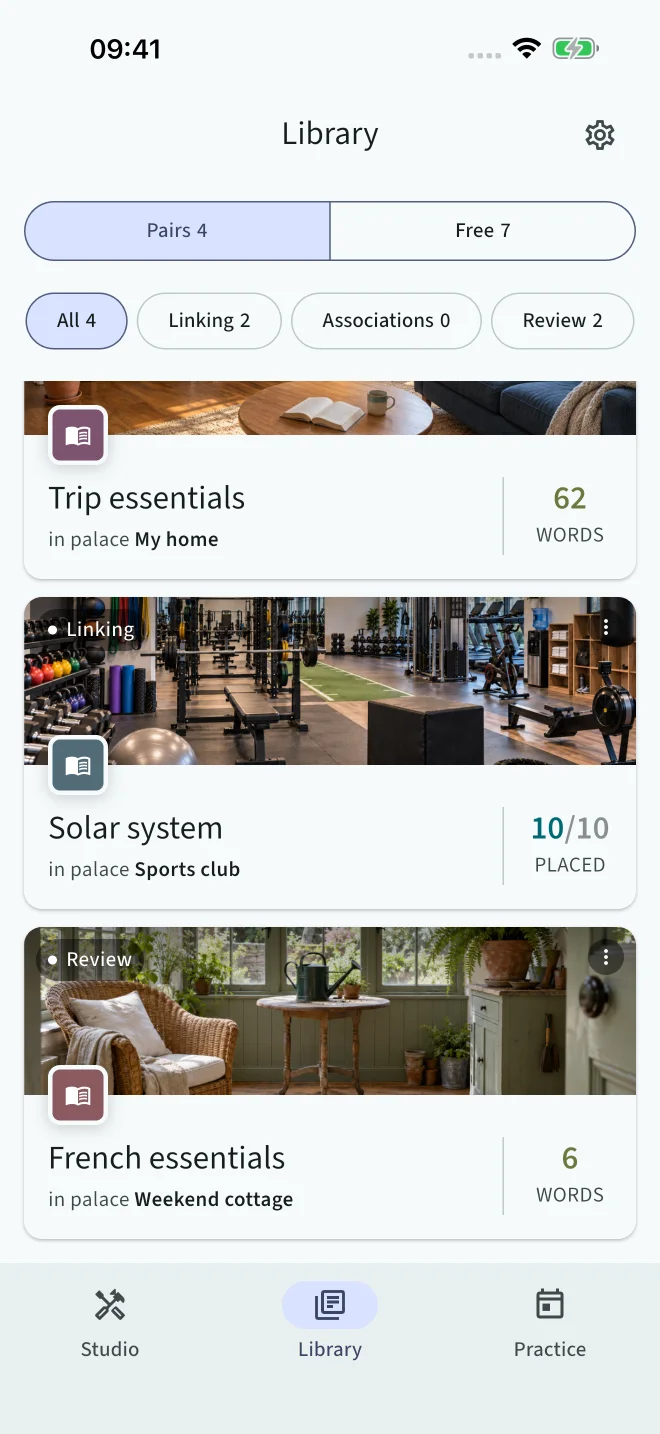
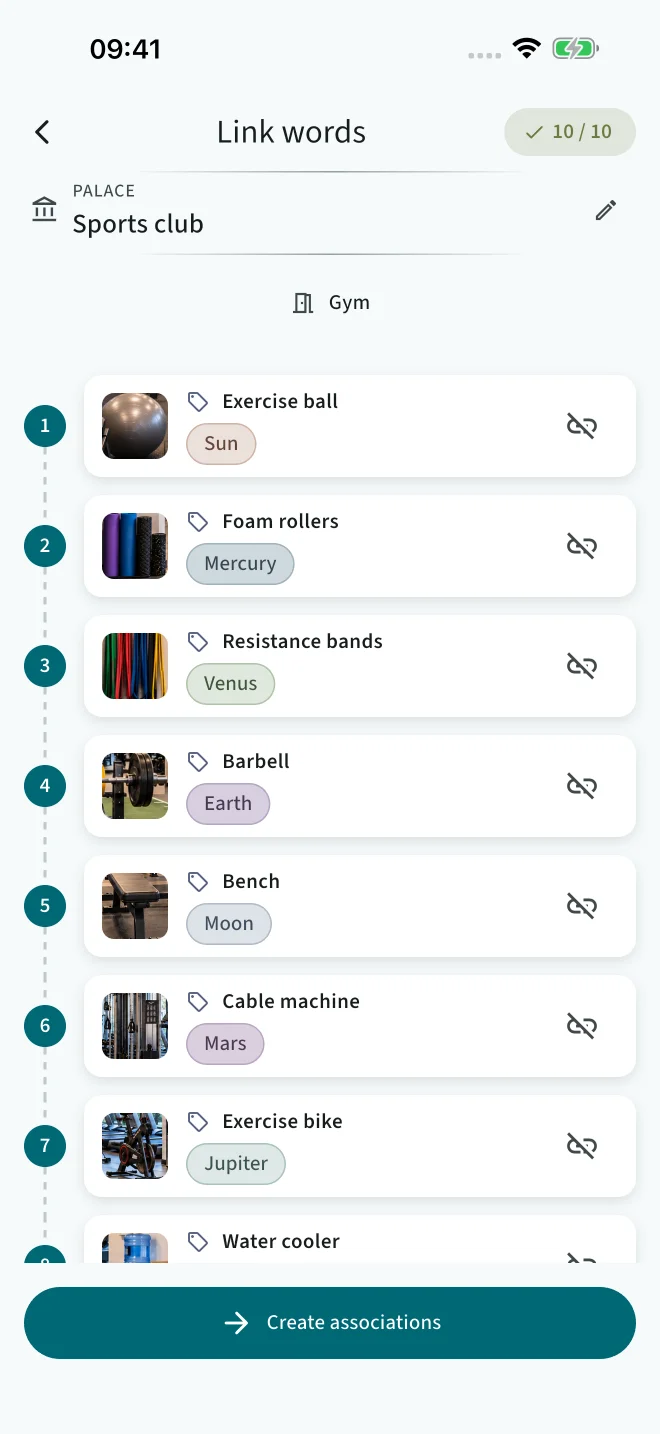
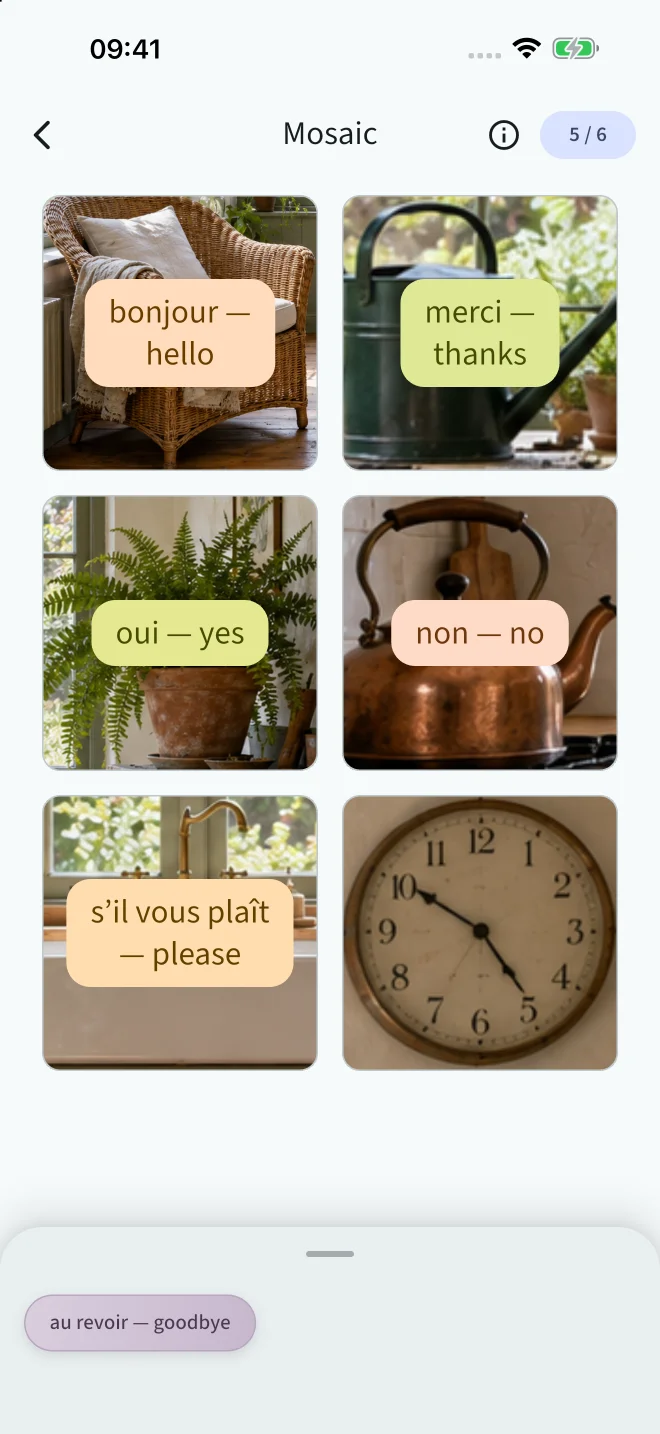
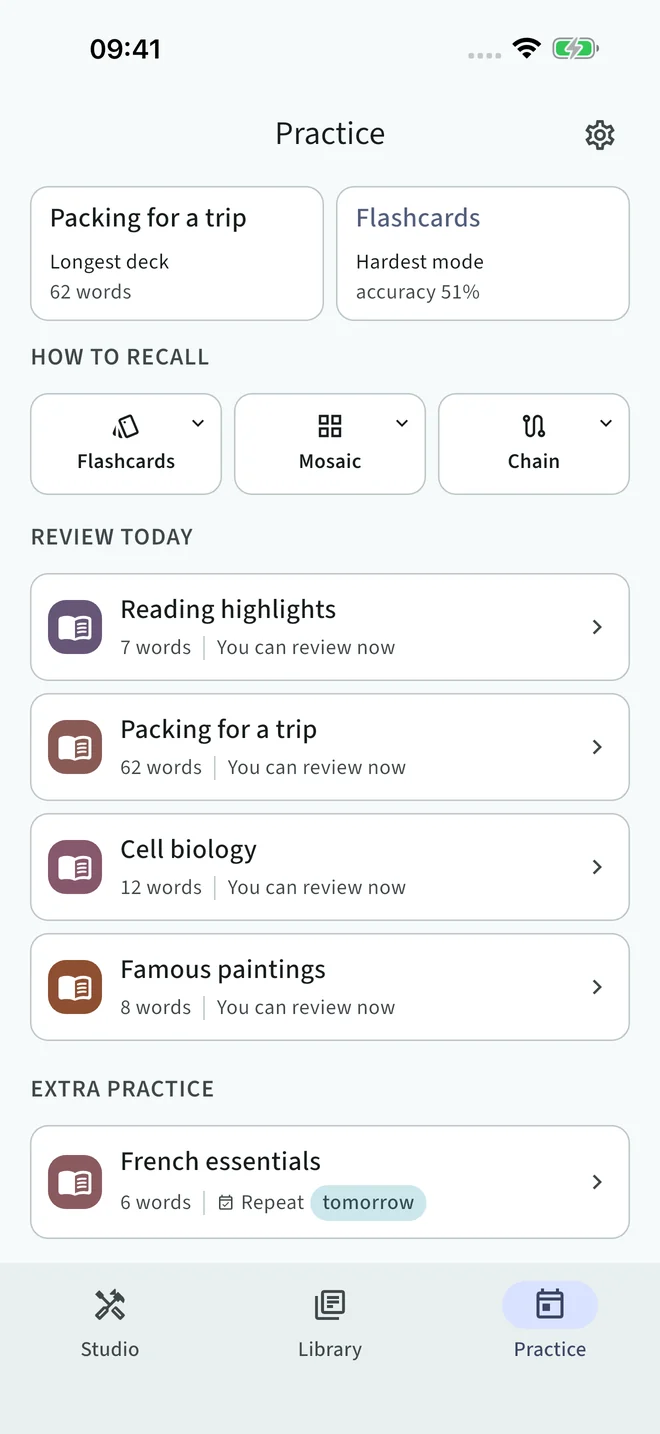
The best known are spaced repetition, flashcards, acronyms and rhymes, the story (link) method, and the Memory Palace. The Memory Palace works best when you need to remember many items in an exact order: lists, talking points, or step-by-step procedures. The techniques combine well: in Tvoryvo you build a route once and keep coming back to it in recall exercises.
How is this different from regular flashcards?
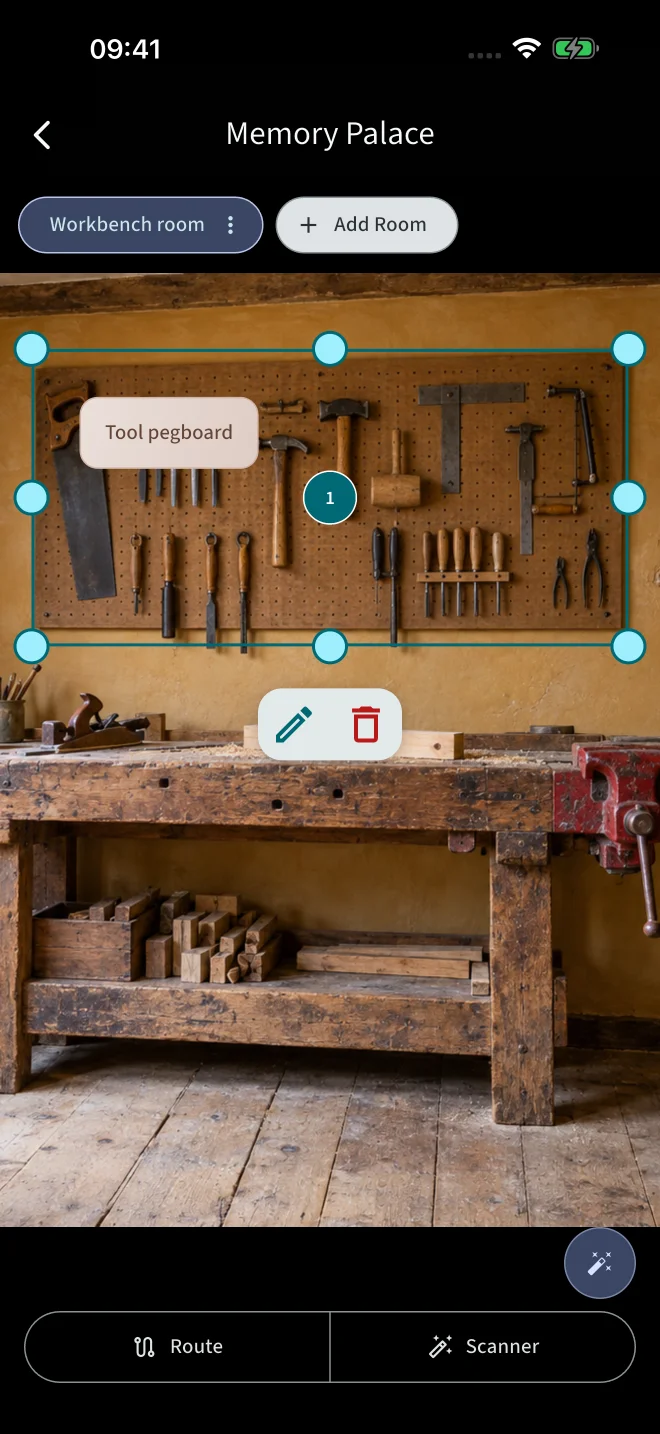
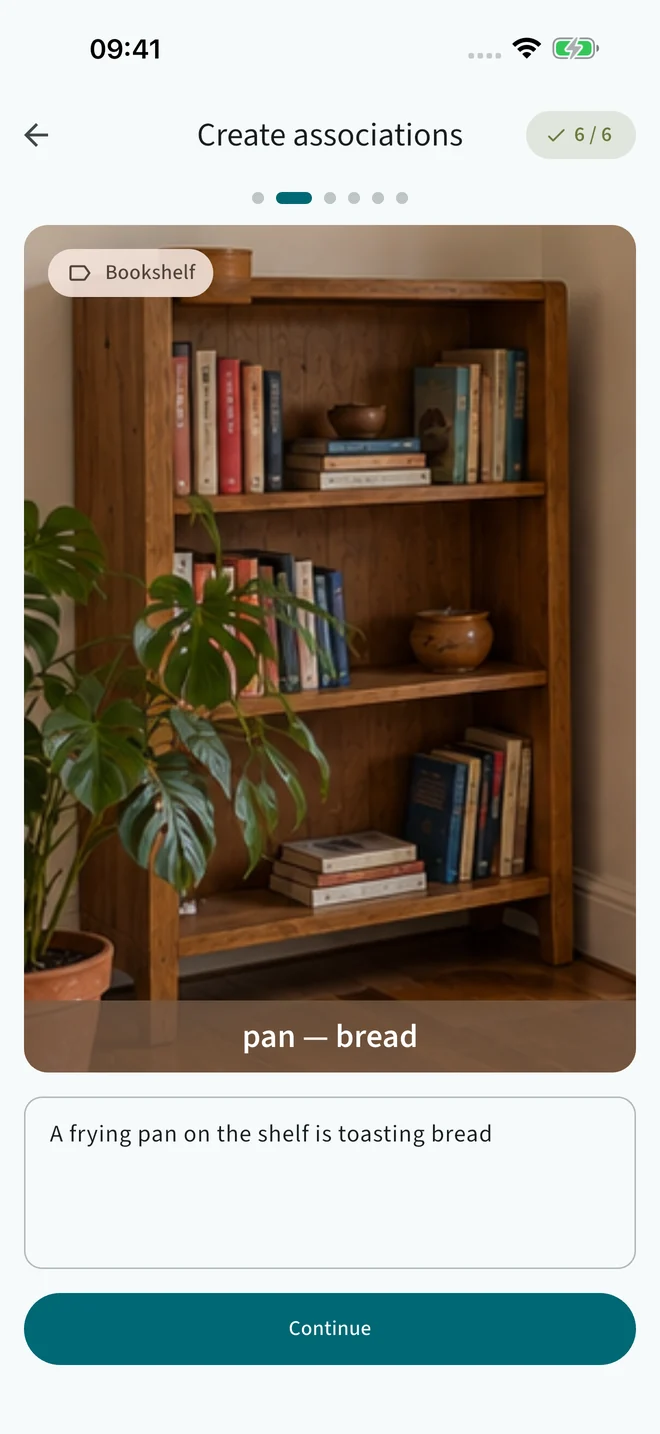
Traditional flashcards present items in isolation; as a deck grows, similar entries can become harder to tell apart. A Memory Palace gives each word or fact a unique spatial address on a real photo and connects them into a route. That spatial context helps you recall both the meaning and the exact order.
How can I remember a shopping or to-do list without notes?
Pick a familiar route—say, from the front door to the kitchen—and place each item at its own spot as a vivid scene: a carton of milk spilling over the doormat, a baguette sticking out of the shoe rack. At the store, walk the route in your mind: each spot gives you its item, and an empty spot tells you something is missing.
How do I learn vocabulary with associations?
Find a part of the foreign word that sounds like something in your own language and turn it into a short scene at a specific spot in the room. The spot tells you where to look, the sound-alike recalls how the word sounds, and the scene's plot gives its meaning.
How can I remember what I read?
After finishing a book, write down 5–10 key ideas, each as a short phrase you could explain in your own words. Tie each idea to an object in a room with a vivid image and walk the route from time to time, recalling what each one means. The book stays with you as a connected structure rather than scattered quotes.
How can I study and retain information?
Close your notes and mentally walk your route, recalling what you've learned. Then open your notes and check your answers. Revisit anything that still slips your mind.
How do I memorize a speech or presentation fast?
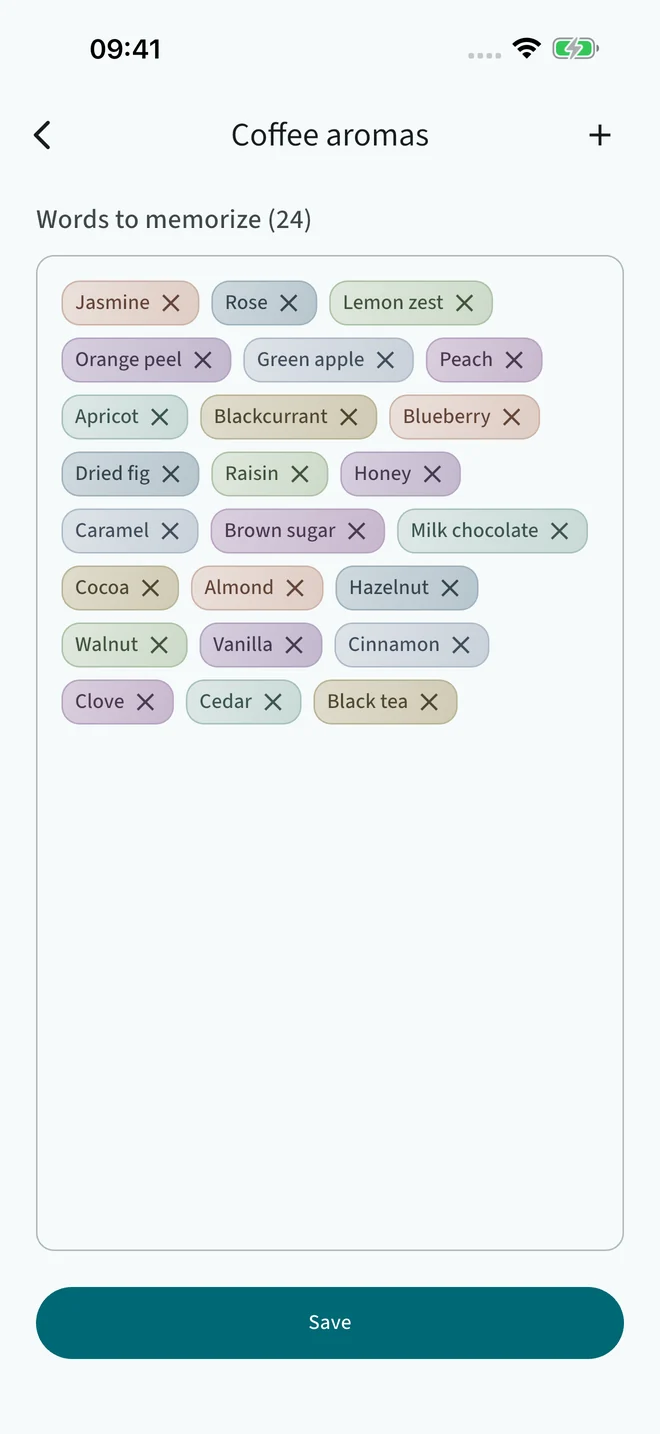
Don't memorize it word for word. Break the talk into key points—opening, arguments, examples, closing—and place each one at its own spot in a familiar room, in the order you'll speak. On stage you mentally walk the route and see the next point, while the wording comes naturally. In Tvoryvo the points become items in a deck and the spots become marks on your photo.